

Strategy Is Openly Discussing Selling Bitcoin
The rise of STRC and recurring dividend obligations is pushing Strategy beyond a simple buy-and-hold Bitcoin treasury model
The Crypto Advisor is your trusted resource for navigating the world of cryptocurrency. Each week, we deliver a clear and concise update on the latest developments in crypto, straight to your inbox. This is more than just a newsletter; it’s an essential resource for forward-thinking advisors focused on maintaining a competitive edge. We’re excited to support your journey in adapting to and thriving in the new age of financial services.

Strategy Is Openly Discussing Selling Bitcoin
For years, one phrase sat at the center of the corporate Bitcoin movement: “Never sell your Bitcoin.”
It was more than a slogan. It became a kind of institutional doctrine around Strategy itself. The company’s entire identity was built on the idea that Bitcoin was not simply a treasury reserve asset to trade around or actively manage, but something closer to permanently scarce digital property meant to be accumulated indefinitely. Every financing round, every preferred offering, every convertible issuance ultimately pointed back toward the same objective: acquire more Bitcoin and keep it off the market.
That is why Strategy’s latest earnings shocked the world.
Buried underneath discussions around preferred securities, financing structures, and dividend mechanics was a surprising departure from the old tone from both Michael Saylor and CEO Phong Le. For the very first time since the company began its Bitcoin strategy in 2020, management openly discussed scenarios where selectively selling Bitcoin could become part of how the broader system operates.
Michael Saylor put it plainly during the call:
“We will probably sell some Bitcoin to fund a dividend just to inoculate the market — just to send the message that we did it.”
Phong Le reinforced the point even further:
“We will sell Bitcoin when it is advantageous to the company. We are not going to sit back and just say we will never sell the Bitcoin.”
For longtime followers of Strategy, those comments represent a dramatic departure from the messaging that helped define the company over the past several years. This is the same firm that built its reputation around relentless accumulation and years of public advocacy centered on the idea that Bitcoin should be acquired, held indefinitely, and removed from circulation whenever possible, hence the mantra, “Never sell your Bitcoin.” It was not simply a slogan attached to Strategy; it became one of the defining affirmations of the broader corporate Bitcoin movement itself.
The comments also arrived at a moment when Strategy’s scale has become difficult to compare to almost anything else in corporate finance. As of May 3, the company held 818,334 BTC worth roughly $64 billion, representing nearly 4% of Bitcoin’s total supply. Holdings have increased roughly 22% year-to-date alone, fueled by an increasingly aggressive mix of equity issuance, preferred securities, and credit-related products.
A major reason for this turn of events appears to be directly linked to STRC, Strategy’s perpetual preferred stock product that has rapidly become one of the company’s most important funding mechanisms. Launched earlier this year, STRC currently offers investors an annualized yield of roughly 11.5%, with dividends paid monthly in cash. Unlike traditional common equity, the structure is specifically designed to appeal to income-oriented investors seeking high yield exposure tied to Strategy’s expanding Bitcoin ecosystem.
That matters because STRC potentially opens Strategy to an entirely different class of capital than the company historically relied on. Earlier phases of Strategy’s Bitcoin accumulation strategy were largely fueled through convertible debt offerings and equity issuance, products that naturally catered more toward growth-oriented investors willing to tolerate volatility. STRC pushes the company further into credit and income markets, potentially expanding its addressable investor base into parts of the market traditionally focused on yield, preferred securities, and income-generating instruments.
But that evolution also changes the dynamics of the system itself. Preferred securities introduce recurring cash obligations that need to be serviced consistently, regardless of whether Bitcoin is rallying aggressively in a given quarter. And once a company begins operating with large-scale dividend commitments attached to an asset primarily designed for long-term appreciation, investors naturally begin asking different questions about liquidity management, financing sustainability, and whether selective Bitcoin sales eventually become necessary to support the larger capital structure.
The market’s reaction to the comments has been notably mixed. Bitcoin initially traded higher following the earnings call, suggesting investors were not immediately interpreting the remarks as a broader reversal of Strategy’s long-term Bitcoin commitment. But in the days since, the conversation across both equity and crypto markets has increasingly centered around a more nuanced question: not whether Strategy will sell Bitcoin, but to what extent selling could eventually become embedded within the company’s operating model as products like STRC continue scaling. Saylor attempted to publicly temper some of those concerns, stating, “Buy more Bitcoin than you sell,” reinforcing the idea that management still views long-term accumulation as the primary objective even if selective sales become part of maintaining the broader capital structure.
At the same time, the situation highlights the increasingly difficult position Strategy occupies within the Bitcoin ecosystem itself. For years, critics argued the company was becoming too dominant within the asset class, accumulating an outsized share of Bitcoin under a single corporate entity. Now, some of those same concerns are resurfacing from the opposite direction, with skeptics questioning whether even limited sales could weaken one of Bitcoin’s strongest long-term accumulation narratives. In many ways, that may simply be the reality of operating at this scale. Once a company becomes one of the largest and most influential holders of a globally traded asset, nearly every capital allocation decision begins generating its own competing interpretation.
Too much Bitcoin. Not enough Bitcoin. Buying too aggressively. Selling at all. At Strategy’s current size, every decision naturally creates its own opposing camp.
Whether investors ultimately view this evolution as bullish or concerning may depend on a much larger question now emerging beneath the surface: Is Strategy still primarily a company accumulating Bitcoin, or is it becoming something closer to a full-scale Bitcoin-backed financial institution? Because as products like STRC expand, dividend obligations grow, and capital markets become increasingly intertwined with the company’s Bitcoin holdings, Strategy appears to be moving beyond the relatively simple “buy and hold” playbook that originally defined it. And if that transition continues, the company may end up influencing not just Bitcoin adoption, but the future structure of Bitcoin-based finance itself.

Washington’s Most Anticipated Crypto Bill Heads To Markup Thursday
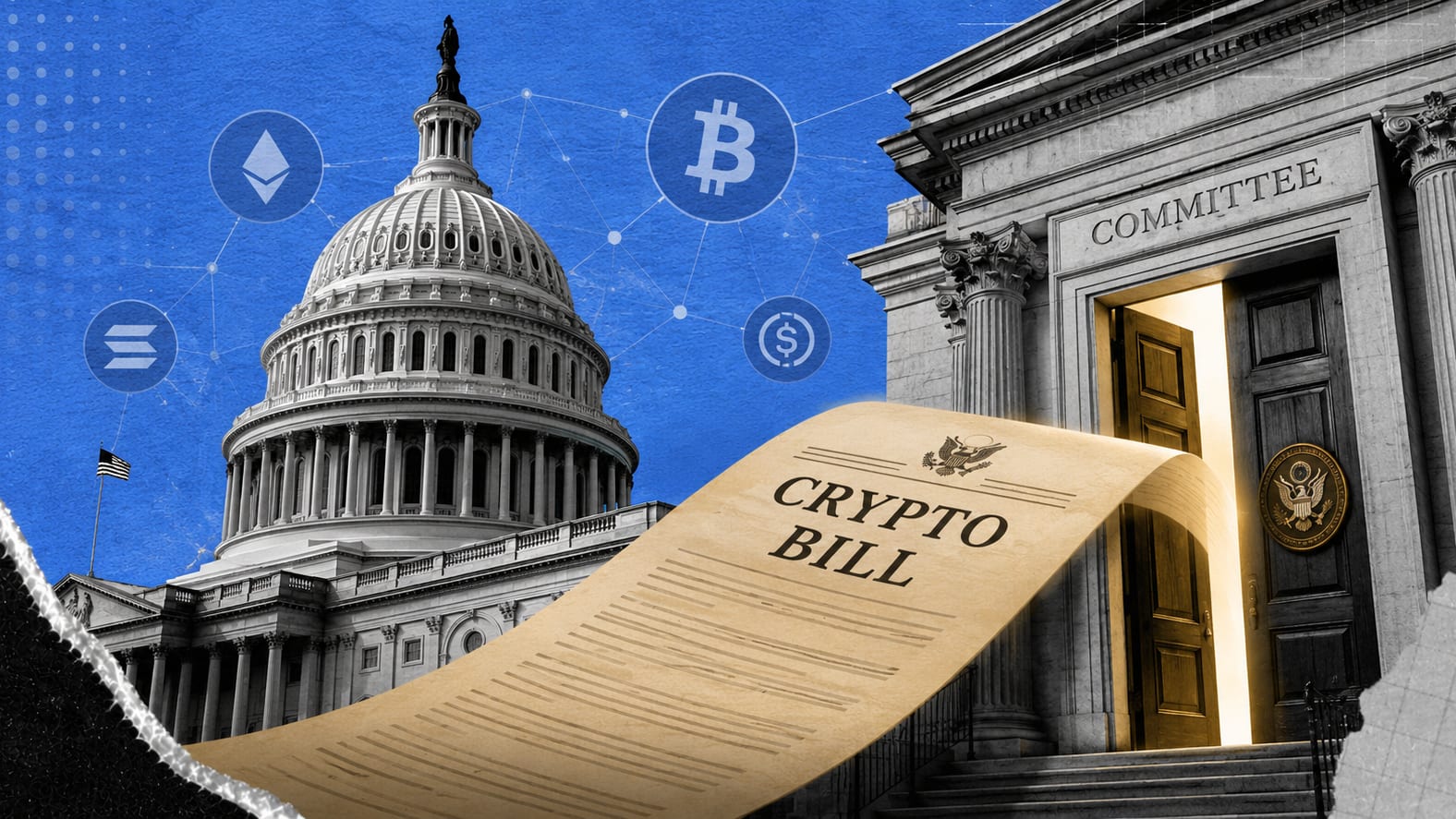
The Senate Banking Committee is preparing to mark up the CLARITY Act this Thursday, May 14, in what has become the most anticipated piece of crypto legislation currently moving through Washington. After months of delays tied to disagreements over stablecoin rewards, tokenized equities, DeFi provisions, and the balance of power between the SEC and CFTC, momentum appears to have returned following a compromise negotiated by Senators Thom Tillis and Angela Alsobrooks.
The latest draft language reportedly restricts stablecoin issuers from offering bank-like yield products while still allowing certain activity-based rewards, a key sticking point that previously caused Brian Armstrong and parts of the industry to withdraw support earlier this year. According to reports, draft legislative text has already been circulated to select industry participants ahead of the expected vote, though portions of the bill remain under active revision.
The significance goes far beyond another crypto headline. The CLARITY Act is widely viewed as the primary vehicle for establishing a formal U.S. market structure framework for digital assets, including clearer jurisdictional boundaries between the U.S. Securities and Exchange Commission and the Commodity Futures Trading Commission. A successful markup would represent one of the most meaningful regulatory advances the industry has seen in years, even though the bill would still need to clear the full Senate and eventually reconcile with the House version passed in 2025.
White House Signals Strategic Bitcoin Reserve Update Within Weeks
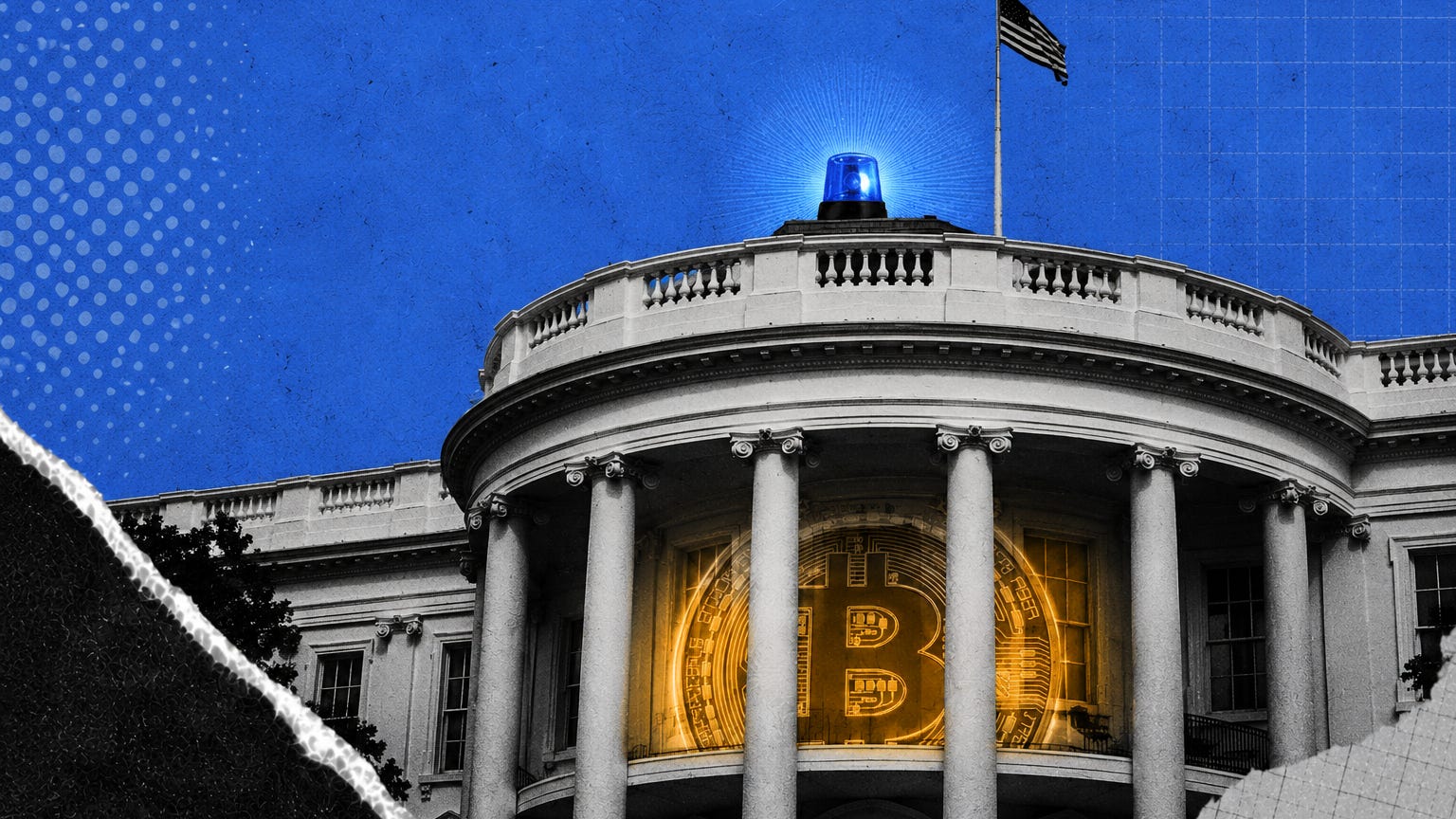
White House digital assets official Patrick Witt said the administration plans to release new details on the U.S. Strategic Bitcoin Reserve in the coming weeks, signaling the initiative is moving deeper into implementation behind the scenes.
Speaking at Consensus Miami, Witt said the White House has made “a lot of progress in the background” on both the Bitcoin reserve and broader digital asset stockpile. The comments come as officials continue addressing custody and security concerns following the alleged $46 million theft tied to wallets controlled by the United States Marshals Service earlier this year.
The Strategic Bitcoin Reserve was established by executive order in March 2025 and directs the federal government to retain forfeited Bitcoin rather than liquidate it. However, major questions remain unanswered, including whether the U.S. will eventually acquire additional Bitcoin beyond seized assets and which agencies will ultimately oversee custody and management of the reserve.
VanEck’s Sigel Says $1M Bitcoin Is The “Base Case”

Matthew Sigel said this week that Bitcoin reaching $1 million within the next five years remains the “base case” for VanEck. Speaking on CNBC, Sigel argued Bitcoin’s adoption curve resembles the evolution of the video game industry, which expanded from a niche activity into mainstream global culture over several decades. “Thirty years ago it was just kids playing video games, now Elon Musk plays video games,” Sigel said, adding that Bitcoin is following a similar path toward broader institutional and societal acceptance.
At the same time, Sigel cautioned that the road ahead is unlikely to be smooth. He described Bitcoin as a “very cyclical asset” with sharp volatility and “no bailouts,” even as adoption continues accelerating. Sigel also pointed to growing sovereign interest, noting that central banks are beginning to add Bitcoin to reserves, calling it a “mega trend.” VanEck’s longer-term modeling is even more aggressive, with the firm previously projecting that Bitcoin could eventually reach $2.9 million by 2050 under its base-case scenario.

The Stablecoin Economy Is Too Large To Ignore
What began as a workaround for crypto traders has quickly evolved into one of the largest new demand centers for U.S. dollars and short-term Treasuries anywhere in global finance. In Bitcoin’s early years, moving between crypto and actual dollars was painfully inefficient. Exchanges regularly lost banking access, international wires could take days to settle, and traders navigating highly volatile markets needed a way to move into something stable without fully exiting the crypto ecosystem. The solution was deceptively simple: create blockchain-based dollars that could move globally, settle within minutes, and trade continuously without relying on traditional banking hours.
That experiment has since exploded into an industry approaching roughly $300 billion in circulation, dominated primarily by Tether’s USDT and Circle’s USDC. Tether alone now has roughly $190 billion outstanding, making it one of the single largest holders of short-term U.S. Treasuries in the world through the reserves backing its stablecoin ecosystem. What makes that remarkable is that Tether was originally built not for Wall Street or banks, but for crypto traders trying to move capital quickly between exchanges during periods of volatility. Today, however, USDT functions as a digital dollar network across parts of Latin America, Asia, Africa, and other regions where access to stable local banking infrastructure can be inconsistent. In some countries, stablecoins are increasingly behaving less like trading instruments and more like portable digital checking accounts denominated in dollars.
Circle’s USDC represents a very different vision for the sector. Launched in 2018 through a partnership between Circle and Coinbase, USDC was designed to appeal directly to institutional finance by emphasizing reserve attestations, regulatory engagement, and backing primarily held in cash and short-duration Treasuries. That positioning helped USDC become deeply integrated across payment companies, tokenized asset platforms, institutional trading desks, and decentralized finance applications. But the stablecoin market’s most important stress test arguably came in March 2023, when Circle disclosed that roughly $3.3 billion of reserves backing USDC were trapped inside Silicon Valley Bank after regulators shut the bank down. USDC briefly lost its dollar peg and traded below $0.90 before recovering after federal intervention guaranteed depositors. The episode exposed an uncomfortable reality for many investors: stablecoins do not eliminate financial risk so much as rearrange where that risk lives.
For RIAs, stablecoins are becoming increasingly difficult to dismiss as simply another speculative crypto product. These networks are now major buyers of Treasury bills, growing participants in global payment flows, and increasingly important infrastructure across tokenized finance. But underneath the shared promise of maintaining a stable one-dollar value sits a wide spectrum of risk models, reserve structures, regulatory exposure, and liquidity assumptions. Understanding stablecoins increasingly means understanding how traditional finance, sovereign debt markets, payment systems, and blockchain infrastructure are beginning to converge into the same system.
Disclaimer: The information provided by The Crypto Advisor is for educational and informational purposes only and does not constitute financial, investment, or legal advice. The Crypto Advisor is not a registered investment advisor, broker-dealer, or financial planner. Nothing in this email should be interpreted as a recommendation to buy, sell, or hold any financial instrument or investment. Always consult with a licensed financial professional before making any investment decisions.