

NFTs Walked So Tokenized Equities Could Run
The speculative mania around digital art faded, but the infrastructure behind on-chain ownership never stopped evolving.
The Crypto Advisor is your trusted resource for navigating the world of cryptocurrency. Each week, we deliver a clear and concise update on the latest developments in crypto, straight to your inbox. This is more than just a newsletter; it’s an essential resource for forward-thinking advisors focused on maintaining a competitive edge. We’re excited to support your journey in adapting to and thriving in the new age of financial services.

NFTs Walked So Tokenized Equities Could Run
In March of 2021, the financial world briefly lost its ability to distinguish between revolutionary technology and complete internet insanity.
A digital art collage created by the artist Beeple sold at Christie’s for $69 million. Celebrities began using cartoon apes as profile pictures. OpenSea’s trading volume exploded into the billions, and at one point, a collection of pixelated CryptoPunks held a higher implied market value than many publicly traded companies. Even Visa purchased an NFT.
For traditional investors watching from the outside, the entire thing often looked absurd. And to be fair, parts of it absolutely were. An enormous amount of speculative excess flooded into the market as ultra-low rates, stimulus liquidity, and pandemic-era internet culture collided headfirst with crypto speculation. Financial advisors probably spent a good portion of 2021 answering some variation of the same question from clients: “Why is a JPEG selling for more than a beachfront house?”
But underneath the speculation, something far more important was subtly being tested in real time: the idea that ownership itself could move onto blockchain networks.
Millions of users were suddenly buying, transferring, custodying, and speculating on purely digital assets that existed entirely on-chain. Smart contracts were handling transactions without traditional intermediaries. Digital wallets were becoming financial accounts. And while most of the NFT market eventually collapsed under the weight of speculation, the underlying infrastructure surrounding tokenized ownership never stopped evolving.
Now, Wall Street appears increasingly interested in applying many of those same mechanics to assets it actually understands: stocks, bonds, treasuries, private credit, and money market funds.
What makes this particularly interesting is that tokenization is no longer being discussed as some distant crypto-native experiment happening on the fringes of finance. Large institutions are already beginning to test pieces of the model in live markets.
Over the past two years, firms like BlackRock, Franklin Templeton, and Apollo Global Management have all expanded deeper into tokenized financial products, while tokenized U.S. Treasury markets have grown into a multi-billion-dollar sector discreetly in the background. In many cases, the early focus has not been equities at all, but rather lower-volatility instruments like money market funds, Treasury exposure, and on-chain cash equivalents that allow institutions to experiment with blockchain settlement systems in more controlled environments.
That shift in focus is important because the real opportunity here is probably not about “crypto stocks” replacing traditional markets overnight. It is about whether blockchain networks can gradually improve the plumbing underneath financial markets themselves. Today’s system still relies on layers of intermediaries, restricted trading hours, delayed settlement, and operational friction that most investors rarely think about until volatility spikes or liquidity dries up.
For advisors, this is where the conversation starts becoming more relevant than the cartoon ape phase ever was. The long-term implications potentially touch everything from market accessibility and trading hours to collateral efficiency, liquidity management, custody models, and the broader digitization of financial assets themselves. The speculative NFT bubble may have captured the headlines, but the more consequential story may have been the infrastructure that survived after the hype disappeared.
Of course, none of this means investors are about to start trading tokenized Apple shares from a crypto wallet tomorrow morning, but it’s coming!
One of the biggest misconceptions around tokenized equities is the assumption that the technology is already fully built out and simply waiting for mass adoption. In reality, many of the underlying regulatory, legal, and operational questions are still being worked through in real time, particularly in the United States.
Unlike NFTs, which largely operated in regulatory gray areas during their boom, tokenized equities sit directly inside one of the most tightly controlled parts of global finance. Once stocks become involved, the conversation immediately expands into securities laws, broker-dealer licensing, transfer restrictions, qualified custody requirements, shareholder rights, and questions surrounding how blockchain-based ownership legally maps back to the underlying asset itself.
That distinction becomes especially important because many tokenized products today are not technically the equity itself living natively on-chain. In some structures, what investors actually hold is a blockchain-based representation of exposure to an underlying asset that remains custodied elsewhere through more traditional financial arrangements. In other words, the technology is advancing faster than the legal framework surrounding it.
Still, the momentum is difficult to ignore. Robinhood has already explored tokenized securities offerings in Europe. Coinbase has openly pushed for clearer rules surrounding blockchain-based equities in the United States. Exchanges like Kraken and Bybit have also explored tokenized stock trading products for international users, while tokenized money market funds and Treasury products continue expanding quietly behind the scenes.
One area where tokenization already starts to feel genuinely practical is tokenized gold, which is something I have personally used and come to appreciate. Products like Tether Gold (XAUT) allow users to move between crypto, stablecoins, and gold exposure almost instantly from the same platform, without needing to wire funds between banks, brokerages, and exchanges or wait for traditional market hours. It is still early, but experiences like this begin to offer a glimpse into what financial markets could eventually look like if tokenization expands further into equities, bonds, and other traditional assets.
That does not mean the future arrives all at once. Most investors are probably not going to wake up next year trading tokenized index funds from a crypto wallet while settling collateral across decentralized applications. The transition, if it happens at scale, will likely be much slower and less dramatic than the hype cycles surrounding crypto often suggest. Pieces of the traditional financial system may gradually migrate onto blockchain networks one market segment at a time, particularly in areas where faster settlement, improved liquidity movement, or around-the-clock markets create clear operational advantages.
Ironically, the speculative NFT mania that much of Wall Street dismissed as internet nonsense may end up being remembered as the financial industry’s first large-scale stress test for tokenized ownership. The cartoon apes, million-dollar JPEGs, and celebrity speculation may have faded, but the infrastructure, user behavior, and institutional curiosity that emerged underneath them never fully disappeared. In many ways, NFTs walked so tokenized equities could run.

Washington’s Crypto Rules Are Finally Starting To Take Shape
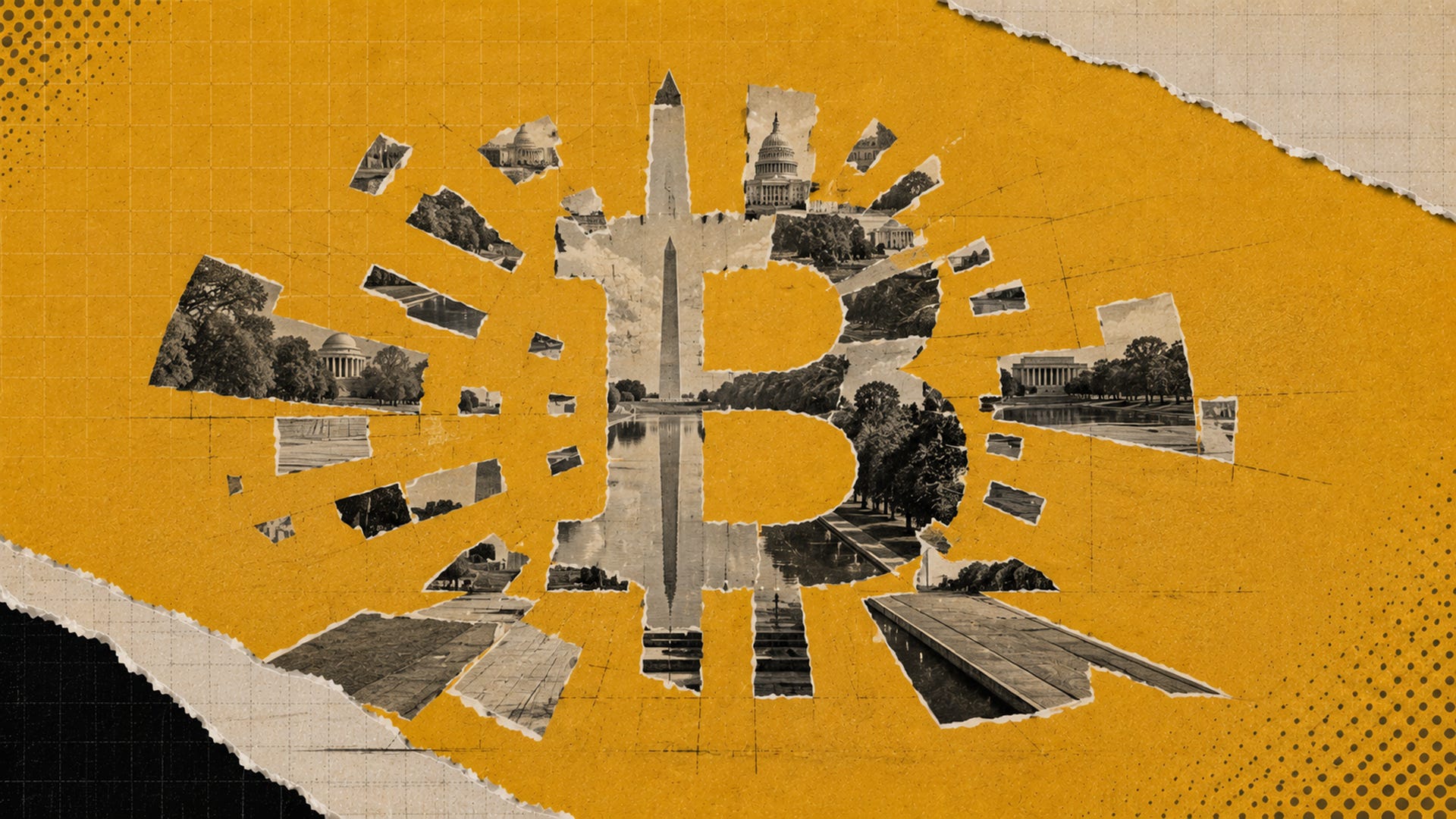
Washington may finally be approaching a turning point on crypto legislation.
This past week, the Senate Banking Committee advanced the Digital Asset Market Clarity Act of 2025 in a bipartisan 15-9 vote after nearly a year of negotiations, pushing one of the most significant crypto market structure bills in U.S. history closer toward the Senate floor. The legislation is designed to establish clearer rules surrounding digital assets, including oversight responsibilities between the SEC and CFTC, while addressing key areas like stablecoins, exchanges, custody standards, and broader market structure. Committee Chairman Tim Scott described the bill as an effort to bring digital assets “into the sunlight with clear rules, stronger safeguards, and better tools to stop bad actors.”
The timing is becoming increasingly important. Reports suggest the White House is now pushing Congress to advance crypto legislation before the July 4 recess, as lawmakers face growing pressure to finalize a regulatory framework before the 2026 midterm election cycle begins dominating Washington’s agenda. Industry participants have warned that if legislation slips too far into election season, comprehensive crypto regulation could become significantly harder to pass. For financial markets, the bigger story here may not simply be crypto prices, but the reality that digital assets are increasingly being pulled deeper into the formal U.S. regulatory and financial system rather than remaining outside of it.
Charles Schwab Opens Direct Bitcoin And Ethereum Trading To Retail Clients
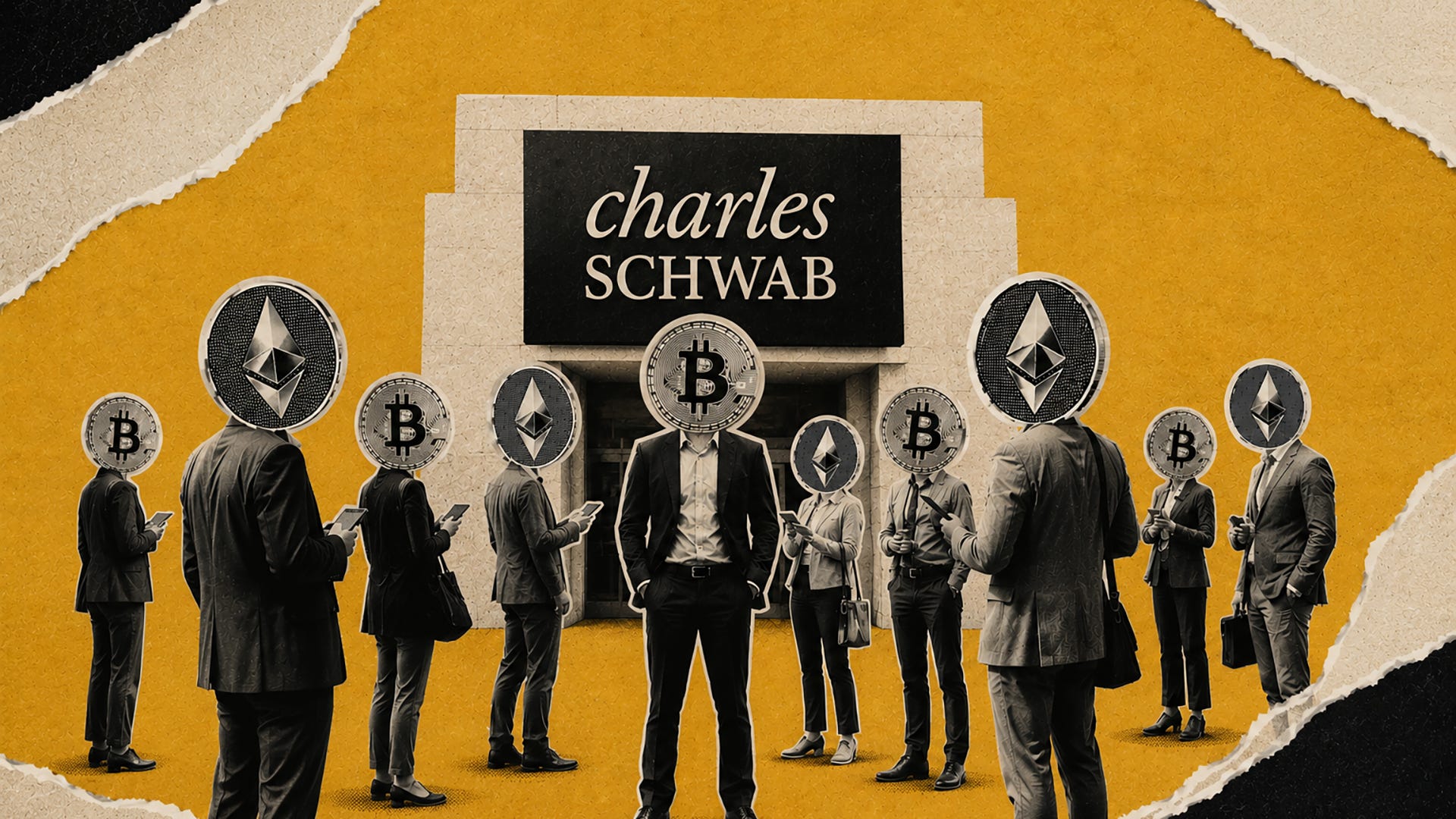
Charles Schwab has officially begun rolling out direct spot Bitcoin and Ethereum trading to select retail clients through its new “Schwab Crypto” platform, marking one of the clearest signs yet that digital assets are continuing to move deeper into mainstream brokerage infrastructure. Until now, Schwab’s crypto exposure had largely been limited to ETFs and other indirect investment vehicles, but eligible users can now buy and sell BTC and ETH directly alongside more traditional financial products.
The rollout is notable not just because of the assets involved, but because of the scale of the institution behind it. Schwab reported roughly $11.77 trillion in client assets and more than 39 million active brokerage accounts as of March 2026. The platform will operate through separate crypto accounts, with Paxos handling trade execution and sub-custody infrastructure. For RIAs, developments like this continue reinforcing a broader trend: crypto exposure is increasingly being integrated into familiar financial platforms rather than remaining isolated within crypto-native exchanges alone.

BlackRock CEO Larry Fink Can’t Stop Talking About Tokenization
While much of the financial world remains fixated on AI, inflation, and interest rates, Larry Fink keeps returning to a very different topic: tokenization. And notably, he is no longer discussing it like a niche crypto experiment or futuristic side concept. In his 2026 annual chairman’s letter, the CEO of the world’s largest asset manager repeatedly described tokenization as a foundational upgrade to financial infrastructure itself. “We’re not spending enough time talking about how quickly we’re going to tokenize every financial asset,” Fink recently said at Saudi Arabia’s Future Investment Initiative conference, warning that most countries are “under-appreciating how technology is changing the plumbing of finance.”
What makes these comments especially notable is the consistency of the message. Fink continues framing tokenization less as a crypto narrative and more as a modernization of how markets function. In his shareholder letter, he wrote that “tokenization can modernize the infrastructure that still makes parts of the financial system slow and costly,” while comparing the current state of tokenization to “where the internet was in 1996.” He also repeatedly emphasizes digital wallets as the future access point for financial markets, envisioning a world where investors eventually hold “ETFs, digital euros, tokenized bonds, and fractional interests in assets” all inside a single regulated wallet.
Importantly, Fink is not describing a future where crypto replaces traditional finance overnight. In fact, one of his more interesting analogies compares tokenization to “a bridge being built from both sides of a river,” with traditional financial institutions on one side and digital-first infrastructure like stablecoins, fintechs, and public blockchains on the other. That framing aligns closely with what markets are already beginning to see in practice. Both BlackRock and JPMorgan Chase have recently announced new tokenized financial products tied to Treasury exposure and on-chain liquidity infrastructure, while firms across Wall Street continue experimenting with blockchain settlement systems, tokenized funds, and digital asset custody.
What stands out most is that Fink keeps returning to the same idea over and over again, regardless of whether crypto markets are booming or struggling. Ethereum could be flat for years, retail interest could disappear, and tokenization would still remain one of BlackRock’s largest long-term infrastructure themes. That persistence matters because major shifts in financial systems rarely look obvious in real time. The internet comparison may sound ambitious today, but so did online commerce in the mid-1990s when Amazon was still primarily selling books out of a website most investors barely understood.
Disclaimer: The information provided by The Crypto Advisor is for educational and informational purposes only and does not constitute financial, investment, or legal advice. The Crypto Advisor is not a registered investment advisor, broker-dealer, or financial planner. Nothing in this email should be interpreted as a recommendation to buy, sell, or hold any financial instrument or investment. Always consult with a licensed financial professional before making any investment decisions.