

Crypto’s Slowest Season Is Behind Us
Q4 could deliver strong returns for digital assets
The Crypto Advisor is your trusted resource for navigating the world of cryptocurrency. Each week, we deliver a clear and concise update on the latest developments in crypto, straight to your inbox. This is more than just a newsletter; it’s an essential resource for forward-thinking advisors focused on maintaining a competitive edge. We’re excited to support your journey in adapting to and thriving in the new age of financial services.

Crypto’s Slowest Season Is Behind Us
September 30th isn’t just another date on the calendar - it’s a line in the sand for crypto seasonality. We’ve now put August behind us (historically the weakest month for median returns), and we’re closing in on the end of September - the single worst month for Bitcoin’s average performance. Layer on top of that Q3 as a whole, which has managed just +5.75% on average since 2013, and you start to see why many investors breathe a sigh of relief once October arrives. For context, Q1 has historically delivered +51.21%, Q2 +27.11%, and Q4 an eye-popping +85.42%.
Seasonality in crypto isn’t as well-mapped as in equities or commodities, but the patterns are hard to ignore. Liquidity can ebb and flow quickly with investor behavior - tax seasons, year-end balance sheet moves, and even the summer trading lull familiar to Wall Street tend to ripple more dramatically in a thinner, more leveraged crypto market. Still, we’d caution against treating seasonality as a hard rulebook. Patterns do exist in this asset class, but they’re often overshadowed by stronger forces - macro shocks, regulatory headlines, and the growing pains of a young market.
Even seasonality has its seasons. Not every September ends in red, and not every Q3 turns out weak. In finance, and crypto in particular, nothing is guaranteed - if it were, the market would have priced it in already.
That naturally raises the question many RIAs ask: how durable are these seasonal quirks, really? In Bitcoin’s early years, a single whale trade or an exchange headline could overwhelm any calendar effect. Today, ETF flows and corporate balance sheets play a bigger role, but they don’t erase seasonality so much as reshape it. The story may be less about seasonality “dying” and more about how it adapts as crypto becomes a deeper, more liquid asset class. Our baseline expectation is that seasonality in crypto will trend toward a parallel state with seasonality in traditional markets.
Of course, the calendar isn’t the only force that shapes crypto cycles. Inside the market itself, capital rotation often creates its own seasons - most recently, what many dubbed an “altcoin summer.” Over the past six months - even with the recent downturn - TOTAL2 (the market capitalization of all cryptocurrencies excluding Bitcoin) is still up more than 50%. It’s a useful gauge of how the broader altcoin market is performing, since Bitcoin often dominates headlines but doesn’t always capture the full picture.
These altcoin rallies don’t happen in a vacuum - they historically depend on Bitcoin giving up some of its market dominance. This year has been no different: Bitcoin’s share of the total crypto market has slipped from a high of 65% to around 58%. That shift reflects capital rotating down the risk curve: investors taking profits from Bitcoin’s strength and reallocating into Ethereum, Solana, and other large-cap names, with pockets of speculation spilling into smaller tokens as well. For advisors, the key takeaway is that while Bitcoin continues to anchor the asset class, periods of declining dominance often fuel altcoin rallies - creating opportunity, but also magnifying volatility.
Now that we have some context, we can talk about the magic of Q4. Since 2013, Bitcoin has averaged a +85.42% return in Q4, with a median of +52.31% - a figure that better reflects the “typical” quarter once you strip out the outliers. Narrow the window to just the past five years, and those numbers settle to a still-impressive +52.67% average and +47.73% median. And perhaps most telling: since 2013, only four of the twelve Q4s have been negative - implying roughly a two-thirds chance of posting gains in any given year.
The magic of Q4 doesn’t stop with Bitcoin - Ethereum has its own seasonal strength worth noting. For the industry’s second-largest asset, Q4 has historically marked the point where returns begin to ramp up. The average return for Ethereum in Q4 is +23.85% (with a median of +22.59%), before accelerating into Q1 at +77.4% and Q2 at +63.8%. Looking at just the past five Q4s, the figures get even stronger - an average of +36.36% and a median of +28.34%. Based on the asset’s history, Ethereum has posted positive returns in Q4 about 55.55% of the time.
While nothing is ever guaranteed in markets, our baseline expectation is that Q4 will deliver strong returns across the board. The crypto asset class is firmly in a bull market - evidenced by steady gains since the end of 2022, broadening institutional adoption, and expanding liquidity. On top of that, the market has neatly followed its historical seasonal rhythm, using Q3 as a reset before entering what has consistently been the most explosive quarter for Bitcoin. When you combine the structural tailwinds of a bull cycle with the seasonal setup of Q4, it creates one of the most favorable backdrops investors could ask for.
Furthermore, investment firms are counting on a bull market - and we expect them to play their part in shaping it. Many of the top crypto firms anticipated Bitcoin would be trading much higher by year-end, which gives them every incentive to deploy funds, promote ETFs, and spin the narrative positively as they return from summer break. That renewed activity helps inject liquidity back into the order book. For asset managers with dry powder, today’s levels offer a rare chance to build positions at a discount to where they expected the market to be.
Here are some of the most notable year-end predictions, made late last year and early this year.
Bitwise: Bitcoin above $200,000 (new ATHs for BTC, ETH, and SOL).
Standard Chartered: $135,000 by Q3 2025; $200,000 by year-end.
VanEck: $180,000 by year-end.
Matrixport: $160,000 in 2025.
Galaxy Digital: $150,000 in H1; $185,000 by Q4 2025.
Bernstein: $200,000 by late 2025 or early 2026.
Regulators will indirectly play a part by streamlining approval of the 90-plus crypto ETFs waiting in line, and even Vanguard, a previously anti-crypto institution, is now reportedly preparing to offer crypto ETF access - more on that development below.
The broader takeaway from seasonality is simple: it reminds us that crypto, like every other market RIAs follow, moves in rhythms. Averages and medians can highlight tendencies, but what matters most is how those tendencies intersect with today’s backdrop of institutional flows, ETF approvals, and expanding access. Right now, the calendar, the flows, and even the narrative are aligned in crypto’s favor - giving Q4 all the greenlights for it to be as powerful and plentiful as history suggests.

Crypto Treasury Boom Meets Regulatory Scrutiny

The Wall Street Journal reports that U.S. regulators are scrutinizing the wave of companies adopting “crypto treasury” strategies for potential insider trading and disclosure violations. According to the report, the SEC and FINRA have contacted some of the 200+ firms that announced plans this year to raise money for crypto purchases, warning against selectively sharing material nonpublic information.
The probe comes as more companies look to replicate the high-profile success of Strategy (formerly MicroStrategy), which began aggressively accumulating Bitcoin in 2020. Regulators are particularly concerned about sharp stock price moves ahead of announcements, which may point to leaks or improper disclosures. We’ve been wary of the aggressive debt-fueled structures behind many of these treasury strategies, and regulators’ involvement now adds a new dimension to this trend.
$20B Raise Could Put Tether Among the World’s Most Valuable Private Firms
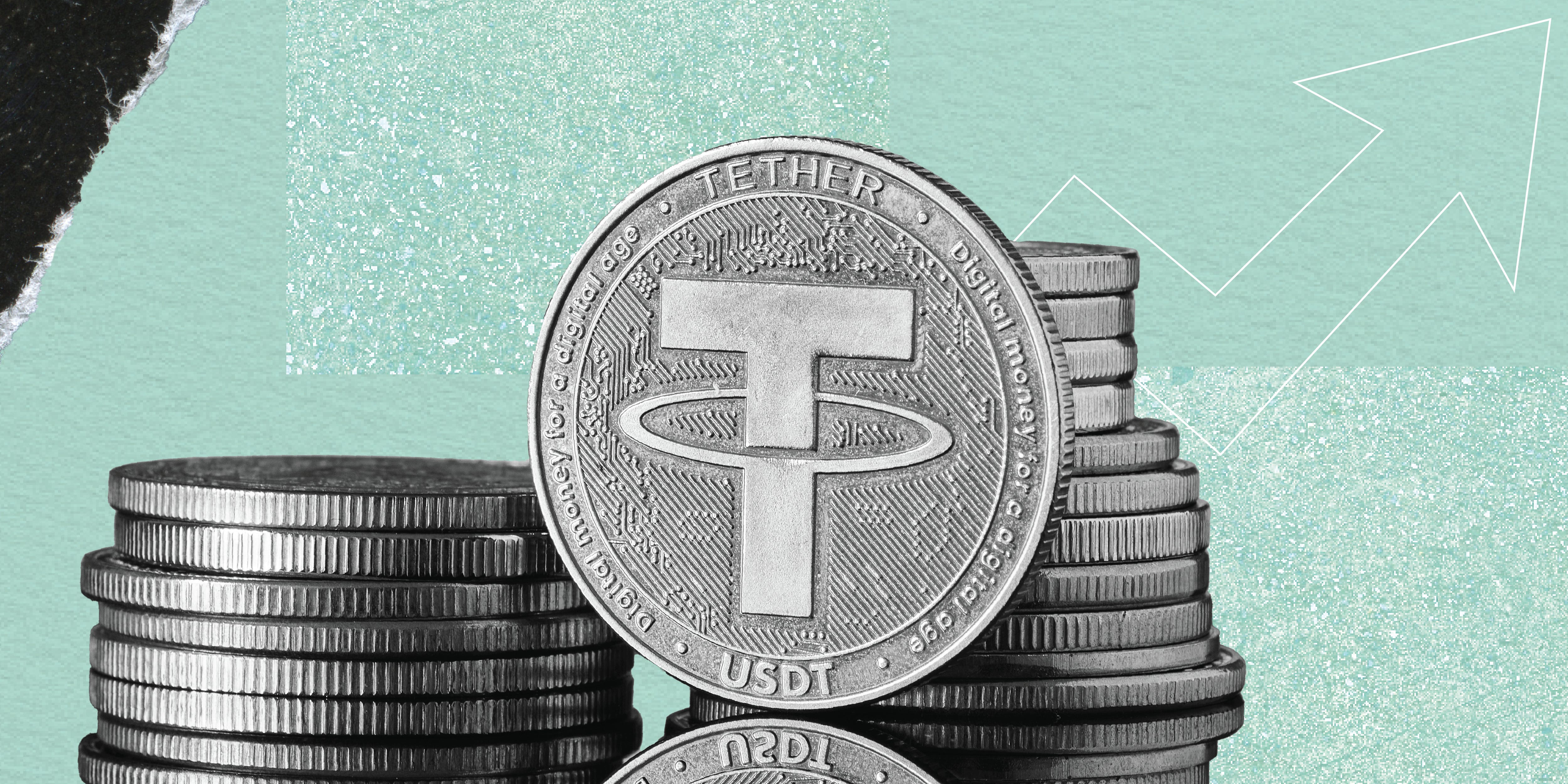
Tether Holdings - issuer of the world’s largest stablecoin, USDt - is reportedly exploring a private raise of up to $20 billion that would value the company near $500 billion, placing it among the most valuable private firms globally. The round, advised by Cantor Fitzgerald, remains in early discussions and may ultimately be smaller, but the scale of the potential valuation underscores Tether’s extraordinary profitability. The company generated $4.9 billion in profit last quarter alone, with $5.7 billion year-to-date - margins that rival or exceed many Fortune 500 companies.
For RIAs, the takeaway is that stablecoin issuers are emerging as some of the most profitable and systemically relevant players in digital assets. Tether currently controls 56% of the $307 billion stablecoin market, with $172.8 billion in circulation. As adoption accelerates and U.S. policy advances under the GENIUS stablecoin bill, the growth trajectory for these firms - and their potential impact on liquidity, payments, and portfolio construction - is hard to ignore.
Vanguard Softens Its Stance: Crypto ETF Access May Be Coming

As alluded to in the main segment, the institutional tide in crypto continues to turn - this time with Vanguard.
The world’s second-largest asset manager, with $10.4 trillion in AUM, is preparing to allow access to crypto ETFs on its brokerage platform, Crypto in America has learned. This change in tune is notable coming from one of the most conservative firms - and one that not long ago said, “We also have no plans to offer Vanguard Bitcoin ETFs or other crypto-related products—our perspective is long-standing that cryptocurrencies’ high volatility runs counter to our goal of helping investors generate positive real returns over the long term.”
The significance is hard to miss. One of the industry’s most prominent crypto holdouts may now be preparing to open the door. With regulators fast-tracking ETF approvals and Vanguard’s new CEO, Salim Ramji, bringing direct experience from BlackRock’s blockbuster IBIT launch, the competitive pressure to offer access is mounting. If Vanguard moves forward, it could mark another milestone in bringing crypto into the mainstream toolkit of American investors.

Explaining Blockchain to Clients - Simply and Clearly
Our readers continue to ask about the basics, so we decided it was time to rewind back to the basics. We have heard that RIAs are consistently being asked the simple questions - which are often the hardest to answer, because they require clarity without jargon. Today, we’ll tackle one of the most common: what exactly is blockchain?
At its core, a blockchain is simply a new way of recording and verifying information. Instead of relying on a single company, bank, or government to maintain the ledger, a blockchain is distributed across thousands of computers that all agree on the same version of history. Every transaction or update is grouped into “blocks” and added in sequence to form a permanent, transparent record. This design makes the system resilient to tampering and creates a foundation of trust without needing a central authority.
When you zoom in a bit, blockchains are essentially shared databases with rules baked into code. These rules determine how data is added, who can participate, and how participants reach consensus. In Bitcoin, the blockchain records ownership and transfer of digital currency. In Ethereum and newer platforms like Aptos, the blockchain can also run “smart contracts” — self-executing agreements that move assets, enforce terms, or trigger actions automatically. This makes blockchain not just a ledger, but a programmable infrastructure for financial services, payments, and beyond.
For advisors, the key point is that blockchain underpins a growing range of digital assets and financial applications. Stablecoins run on blockchains to move dollars globally at low cost. Tokenization efforts record ownership of money-market funds, treasuries, or even real estate on a blockchain for faster settlement. And decentralized finance uses blockchain to replicate functions like lending, trading, or custody — but without intermediaries. In other words, blockchain is both the recordkeeping system and the rails on which this new digital financial market is being built.
Disclaimer: The information provided by The Crypto Advisor is for educational and informational purposes only and does not constitute financial, investment, or legal advice. The Crypto Advisor is not a registered investment advisor, broker-dealer, or financial planner. Nothing in this email should be interpreted as a recommendation to buy, sell, or hold any financial instrument or investment. Always consult with a licensed financial professional before making any investment decisions.