

Crypto’s Mar-a-Lago Moment May Complicate Washington’s Regulatory Push
A presidential memecoin gala is becoming part of the political narrative surrounding crypto legislation, ethics debates, and the industry’s fight for institutional credibility.
The Crypto Advisor is your trusted resource for navigating the world of cryptocurrency. Each week, we deliver a clear and concise update on the latest developments in crypto, straight to your inbox. This is more than just a newsletter; it’s an essential resource for forward-thinking advisors focused on maintaining a competitive edge. We’re excited to support your journey in adapting to and thriving in the new age of financial services.
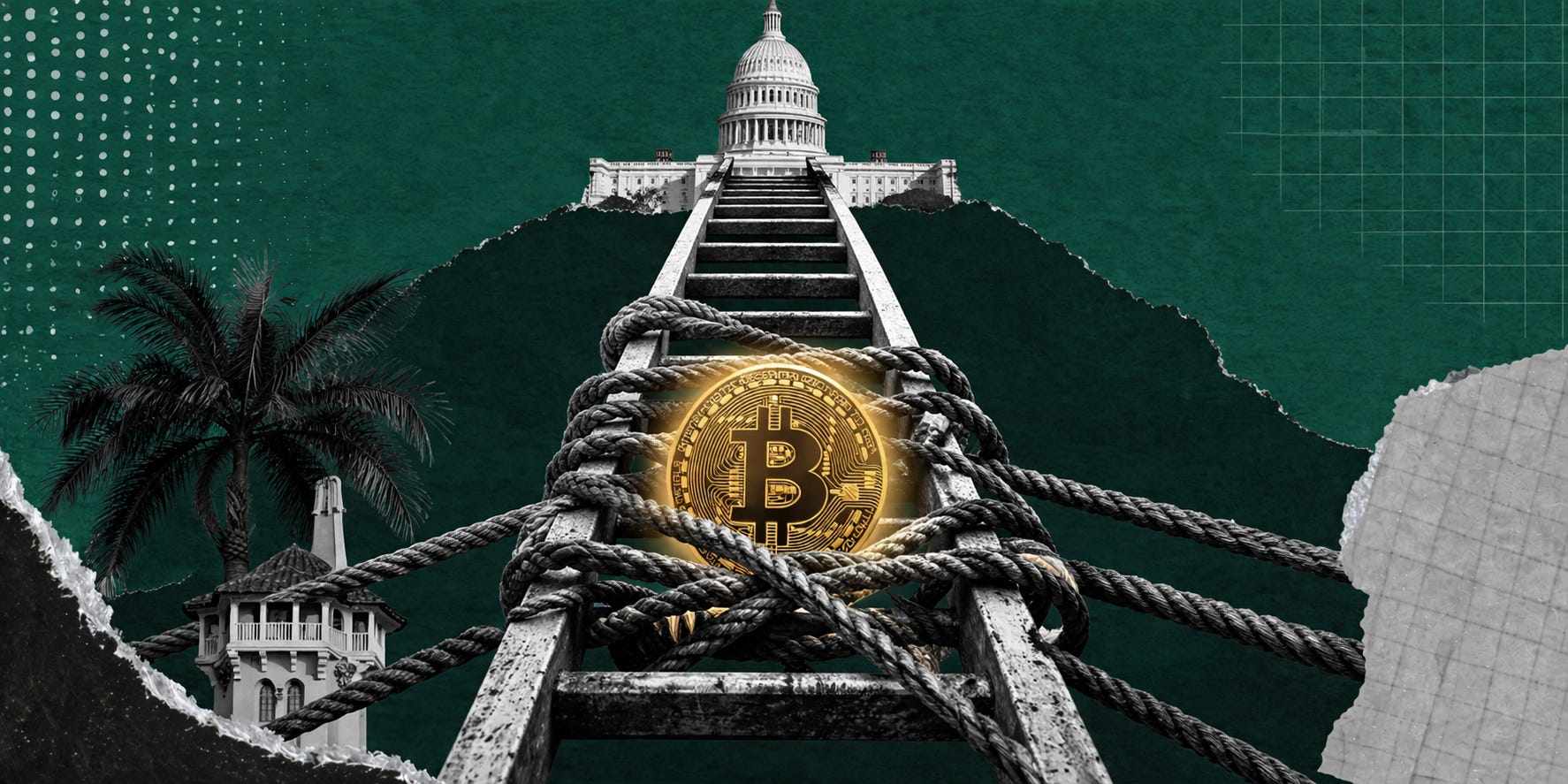
Crypto’s Mar-a-Lago Moment May Complicate Washington’s Regulatory Push
For much of the past year, the digital asset industry has been trying to convince Washington and Wall Street that crypto is finally growing up.
Stablecoins are increasingly being discussed as a payment infrastructure. Tokenization has become a legitimate conversation inside major financial institutions. Regulatory frameworks are slowly taking shape after years of uncertainty. Large asset managers, banks, and public companies are no longer asking whether crypto matters, but how to position themselves around it.
And then, over the past weekend, one of the most visible crypto events in America turned into a presidential memecoin gala at Mar-a-Lago.
On Saturday, April 25, the top 297 holders of the Official TRUMP memecoin attended a private luncheon hosted at President Donald Trump’s Mar-a-Lago resort. The top 29 holders received access to an additional VIP reception and a champagne toast with the President. Entry was determined through a time-weighted leaderboard system that tracked wallet balances between March 12 and April 10, effectively rewarding participants who accumulated and held the largest amount of TRUMP tokens over the qualifying period.
The structure immediately raised questions that extend far beyond crypto markets themselves.
According to previous Bloomberg reporting, many of the largest holders of the token are believed to be foreign nationals, while blockchain analytics estimates suggest affiliated entities connected to the Trump family have generated hundreds of millions of dollars in transaction fees tied to the token since launch. Meanwhile, concentration inside the asset remains extraordinarily high, with the top wallets controlling the overwhelming majority of supply.
For critics of the industry, the optics were almost too easy.
But the most important part of the story may not be the token holders themselves. It may be those who willingly showed up beside them.
The speaker and attendee roster was filled with recognizable figures from both traditional finance and crypto - individuals with established reputations, institutional relationships, and audiences far beyond the typical memecoin trading crowd. This was not a room dominated by anonymous online traders chasing speculative hype cycles. It was a room full of professionals who understood exactly how these events would be perceived publicly and politically - and attended anyway.
The nuance here is important.
Because what is unfolding now is larger than a single memecoin launch or gala. It reflects a broader calculation taking place across the industry: that proximity to the administration currently shaping crypto policy may be strategically valuable enough to outweigh the reputational risks attached to events like these.
From a purely practical perspective, the logic is understandable.
The regulatory environment surrounding digital assets has improved materially over the past year. Under SEC Chairman Paul Atkins, the agency has taken a noticeably more constructive approach toward crypto markets than it did under former Chairman Gary Gensler. Banks once again have clearer pathways for custodying digital assets. Stablecoin legislation has advanced meaningfully through Congress. Market structure discussions that had stalled for years are now moving through committee rooms in Washington.
For firms operating in the space, access matters while those rules are still being written.
That is precisely why events like these become politically dangerous at the same time.
The challenge for the industry is that both realities can be true simultaneously. Regulatory progress can be genuine, while the ethical concerns surrounding presidential crypto ventures can also be legitimate. One does not cancel out the other.
And increasingly, lawmakers are beginning to merge the two conversations together.
In recent days, Democratic lawmakers, including Senators Elizabeth Warren, Adam Schiff, and Richard Blumenthal, publicly criticized the gala and requested additional information surrounding the event, framing it as a potential monetization of presidential access through crypto assets.
Whether one agrees with those criticisms politically is almost secondary to the larger issue.
The language is already becoming part of the broader narrative surrounding crypto legislation in Washington.
That matters because the industry’s most important regulatory effort - the CLARITY Act - is now moving through a highly fragile political process in the Senate Banking Committee. One of the largest sticking points involves ethics provisions tied specifically to whether government officials and their families should be permitted to profit from crypto-related ventures while shaping the regulatory framework governing the industry itself.
Events like the Mar-a-Lago gala do not exist separately from that debate. They feed directly into it.
For financial advisors and institutional allocators watching from the sidelines, this creates a more complicated reality than many anticipated entering 2026. On one hand, the infrastructure story surrounding digital assets continues to strengthen. Stablecoin adoption is expanding globally. Tokenization initiatives are accelerating. Large financial institutions are investing heavily in blockchain-based settlement systems and digital asset rails.
The fundamental institutional case for crypto arguably looks stronger today than it did two years ago.
At the exact same time, however, the industry continues struggling with an image problem that repeatedly resurfaces whenever credibility appears to be improving.
That contradiction was impossible to miss this past weekend.
While major developments continue unfolding across payments, custody, and financial infrastructure, one of the most photographed crypto events in America became a memecoin leaderboard competition tied to presidential access and VIP champagne receptions.
For an industry attempting to position itself as the next evolution of financial infrastructure, those images carry consequences far beyond social media discourse.
Because, regardless of where firms or investors stand politically, these moments do not remain isolated cultural spectacles. They eventually become talking points in congressional hearings, regulatory negotiations, institutional risk committees, and media narratives shaping public perception around the asset class itself.
And increasingly, those narratives may influence the pace and structure of the very regulatory clarity the industry has spent years asking Washington to provide.

Latest Clarity Act Negotiations Show Signs Of Progress
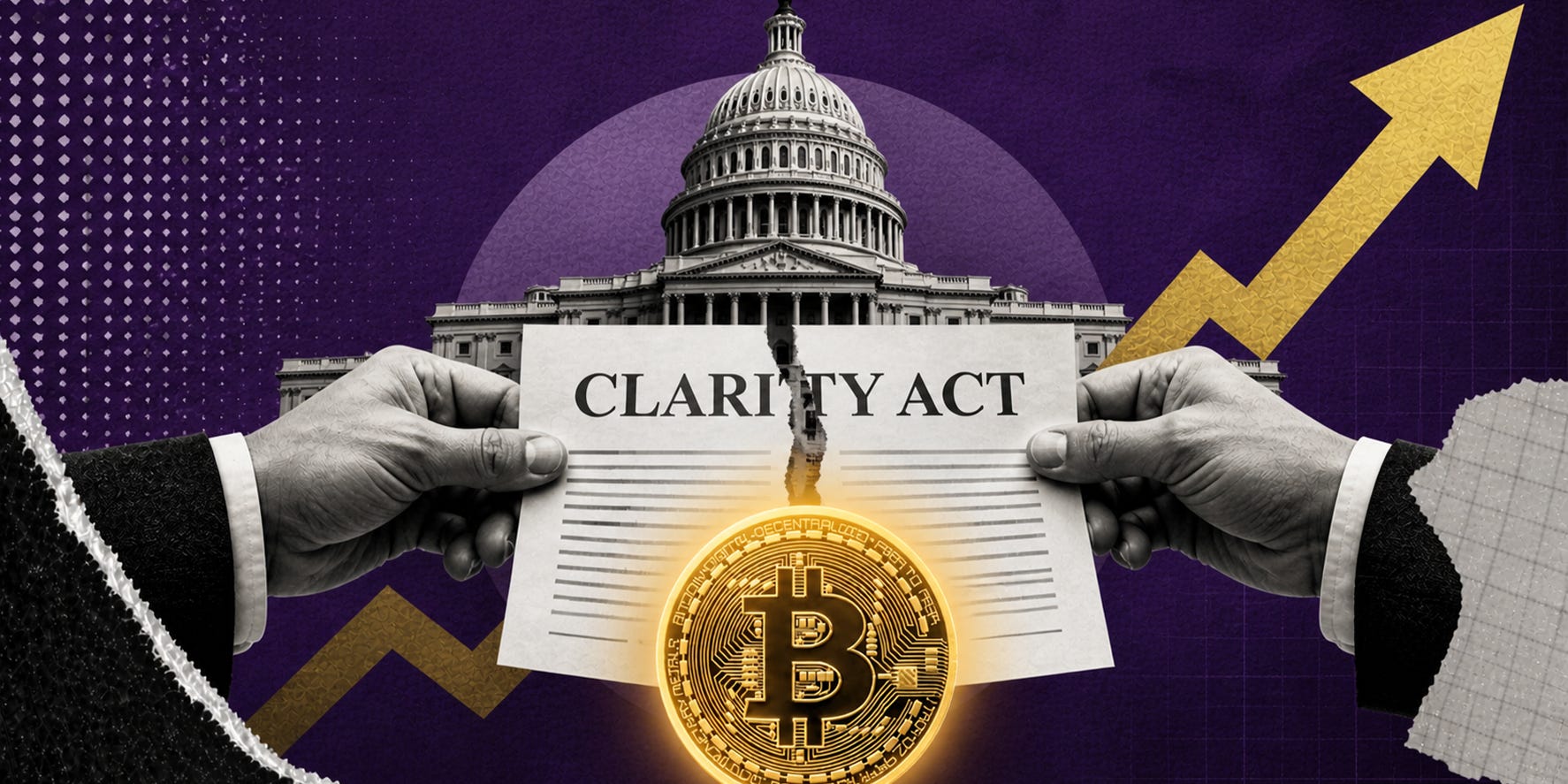
Momentum appears to be building again around the crypto market structure bill on Capitol Hill, with Thom Tillis signaling he is ready to push the Clarity Act toward a formal committee markup after what lawmakers described as significant progress in negotiations. According to Tillis, many of the banking industry’s concerns surrounding stablecoin yield provisions have now been addressed, while discussions are increasingly shifting toward unresolved issues involving DeFi regulation, developer protections, ethics language, and interpretations of Section 1960 money transmission laws.
Cynthia Lummis, who has been closely involved in negotiations surrounding developer protections, said lawmakers have made “significant progress” on safeguards for non-controlling software developers in relation to money transmission rules. Current expectations are that some of the ethics-related provisions may ultimately be added later in the legislative process after the bill reaches the Senate floor, while Tillis indicated updated legislative text tied to stablecoin yield provisions could be released shortly before a markup vote.
Morgan Stanley Launches Stablecoin Reserve Fund As Wall Street Competition Intensifies

Morgan Stanley has launched a money market fund designed specifically for stablecoin issuers, allowing firms to manage reserve assets across cash, U.S. Treasuries, bonds, and repurchase agreements as demand for regulated digital dollar infrastructure continues growing. The new Stablecoin Reserves Portfolio aligns with the GENIUS Act framework and positions Morgan Stanley more directly alongside firms already managing stablecoin reserve assets, including BlackRock through its relationship with USDC issuer Circle. The move reflects how major financial institutions are increasingly viewing stablecoin reserve management as a long-term business opportunity tied to the expansion of blockchain-based payments, settlement, and tokenized financial systems.

This DeFi Recovery Effort Resembled A Traditional Bailout
A recent crypto exploit has triggered one of the more coordinated recovery efforts the decentralized finance (DeFi) sector has seen in years. The issue began after a technical flaw allowed a crypto asset called rsETH to be improperly created without sufficient backing, enabling an attacker to borrow large amounts of funds against essentially faulty collateral. The resulting shortfall spread across several major crypto platforms, highlighting how interconnected parts of the digital asset ecosystem have become.
What makes the situation notable is not simply the exploit itself, but the industry’s response afterward. Rather than allowing losses to fully cascade through the system, a growing group of crypto firms and protocols began coordinating a stabilization effort involving capital injections, loans, governance proposals, and recovered funds. Some participants appear to be supporting the ecosystem outright, while others are structuring assistance more like traditional financing arrangements with collateral, yield, strategic incentives, and downside protections attached.
In many ways, the situation resembles the type of coordinated support efforts often seen in traditional financial markets during periods of stress. While DeFi has historically marketed itself around decentralization and disintermediation, moments like this show how financial systems - whether traditional or blockchain-based - often evolve toward similar stabilization behavior once enough capital and systemic exposure is involved. The broader takeaway is that as digital asset infrastructure matures, parts of the crypto industry are increasingly beginning to function less like isolated speculative markets and more like interconnected financial systems attempting to contain risk before it spreads further.
Disclaimer: The information provided by The Crypto Advisor is for educational and informational purposes only and does not constitute financial, investment, or legal advice. The Crypto Advisor is not a registered investment advisor, broker-dealer, or financial planner. Nothing in this email should be interpreted as a recommendation to buy, sell, or hold any financial instrument or investment. Always consult with a licensed financial professional before making any investment decisions.